
Verified Engineering Data for Pressure Grouting Applications
US Pressure Grouting Administrations (USPGA) maintains this section to support fact-based evaluation of pressure grouting, slab jacking, and foundation stabilization systems. The data referenced here helps engineers, agencies, contractors, and asset owners understand how pressure grouting materials and methods perform when evaluated against recognized pressure grouting standards.
Pressure grouting should be supported by verifiable testing, documented performance, and engineering review, particularly when used in load-bearing or structural applications.
Research, Material Science, and Performance Behavior
USPGA references independent research and published engineering literature addressing material science topics relevant to pressure grouting and CLSM-based systems. This includes research on cementitious grout behavior, bentonite and supplementary cementitious materials, flow modifiers, and admixture performance under varying field conditions.
Material science research provides insight into workability, setting time, stability, and long-term durability, helping explain why properly engineered grout systems behave differently depending on subsurface conditions, mix design, and placement methods.
Research is used to inform engineering judgment, not replace it.
Testing Benchmarks and Verification
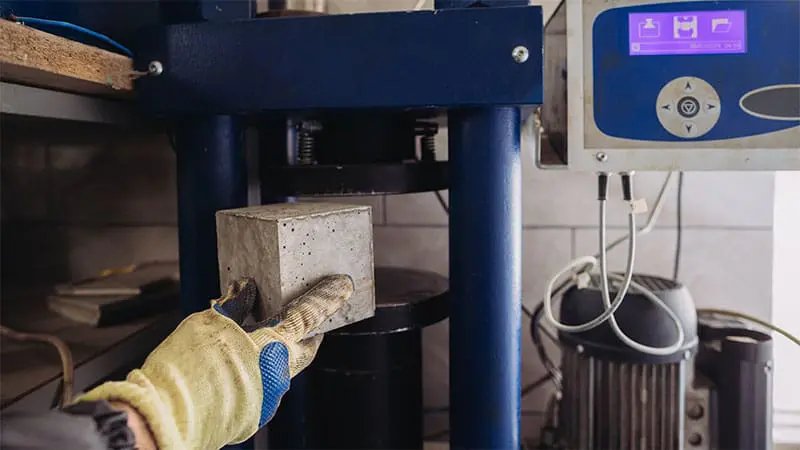
Material testing is a critical component of responsible pressure grouting practice. USPGA references independent laboratory testing and field benchmarks to establish reasonable performance expectations for pressure grouting, slab jacking, pavement undersealing, and foundation stabilization applications.
Testing benchmarks commonly evaluated include compressive strength development, slump and flow control, early-age and 28-day performance, non-shrink behavior, and stability under load.
Independent laboratory results demonstrate that properly engineered cementitious pressure grout and CLSM mixes can achieve compressive strengths ranging from approximately 3,800 PSI to over 8,600 PSI, depending on mix design, placement method, and application requirements.
Testing data should be reviewed in conjunction with applicable DOT specifications and IBC requirements, with appropriate engineering oversight and compliance, not in isolation.
How USPGA Uses Data
USPGA uses research, material science, and testing data to inform pressure grouting standards, support technical guidance, and assist engineers and agencies in evaluating compliance.
Research and testing data are often referenced alongside USPGA’s industry guidance and position papers to support consistent interpretation and responsible application across pressure grouting projects.