
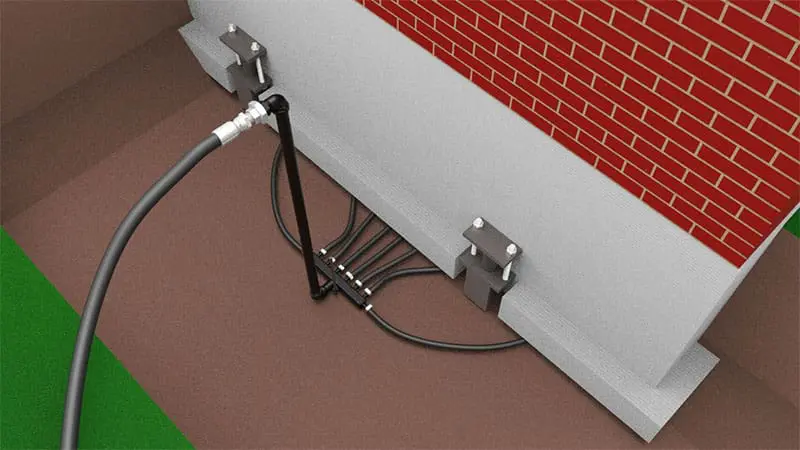
Engineering Standards for Pressure Grouting Applications
US Pressure Grouting Administrations (USPGA) establishes and maintains guidance related to pressure grouting standards for infrastructure, slab stabilization, pavement undersealing, void filling, and foundation support applications across the United States.
Pressure grouting is an engineered process that directly affects load transfer, subgrade stability, and long-term structural performance. As such, it must be evaluated and executed in alignment with recognized building codes, Department of Transportation (DOT) specifications, and established geotechnical engineering principles.
USPGA standards exist to support consistent interpretation of requirements and to distinguish engineered pressure grouting practices from non-engineered injection methods.
Code Alignment and Regulatory Framework
USPGA pressure grouting standards are aligned with applicable provisions of the International Building Code (IBC), state and federal DOT specifications, and published engineering references governing soils, foundations, and pavement systems.
These standards emphasize:
- Material suitability and classification, including cementitious grout and CLSM applications
- Engineering oversight and documentation requirements
- Performance verification through testing and inspection
- Compatibility with subsurface conditions and load-bearing requirements
Pressure grouting standards should be applied with consideration for jurisdictional requirements and project-specific engineering criteria. USPGA guidance is intended to support, not replace, the professional judgment of licensed engineers.
For performance expectations and supporting data, USPGA standards are informed by research, testing, and material performance data.
Application of USPGA Standards
USPGA pressure grouting standards are intended to support engineers, agencies, contractors, and asset owners throughout the lifecycle of a pressure grouting application.
Standards may be applied when:
- Developing or reviewing pressure grouting specifications
- Evaluating material submittals and mix designs
- Reviewing testing results and acceptance criteria
- Assessing compliance with IBC and DOT requirements
- Addressing performance questions or post-construction concerns
Application of standards should include appropriate engineering oversight and compliance review, particularly for load-bearing or structural applications.
USPGA standards are closely aligned with published industry guidance and position papers, which provide additional technical context and clarification where questions arise.
Application of USPGA Standards
USPGA pressure grouting standards are intended to support engineers, agencies, contractors, and asset owners throughout the lifecycle of a pressure grouting application.
Standards may be applied when:
- Developing or reviewing pressure grouting specifications
- Evaluating material submittals and mix designs
- Reviewing testing results and acceptance criteria
- Assessing compliance with IBC and DOT requirements
- Addressing performance questions or post-construction concerns
Application of standards should include appropriate engineering oversight and compliance review, particularly for load-bearing or structural applications.
USPGA standards are closely aligned with published industry guidance and position papers, which provide additional technical context and clarification where questions arise.
Relationship to Other USPGA Resources
Pressure grouting standards form the foundation of USPGA’s broader technical framework. They are supported by independent research, testing benchmarks, and engineering review, and are applied through advisory and compliance services.
For broader reference materials and source documentation, users are encouraged to review the USPGA Resources section.